WARP: WAshington Resurvey of Pierids
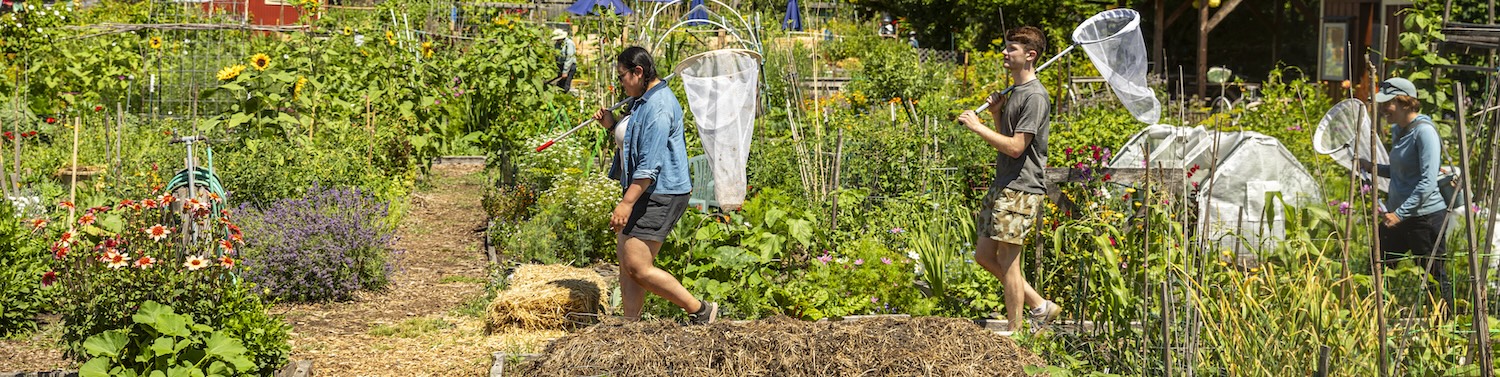
 We are building upon the Colias resurvey project to test how selection on butterfly traits has shifted in response to recent climate change. The research will identify the biological mechanisms underlying evolutionary and plastic responses to climate change by quantifying how butterfly temperatures have shifted over several decades and developing a mechanistic model that links the temperature changes and traits to ecological and evolutionary responses. The following studies will test the mechanisms predicted to drive evolution and refine the model. Repeating field selection studies will investigate whether selection on Pieris rapae larval thermal performance curves (TPCs) and on Pontia occidentalis adult body size and wing traits has shifted over time. Studying selection on several wing traits across seasons will indicate relative selective responses to thermal means versus extremes and assay whether selection varies seasonally. The research will determine whether selection results in evolution of larval TPCs as well as adult traits and their plasticity. The project will test several hypotheses related to recent warming. Performance at high temperatures will be enhanced relative to the past. Wing coloration involved in heat-avoidance postures will be lighter. Wing coloration involved in basking may lighten in response to climate warming, but there may be selection for wing darkening to allow for performance in cool, early season conditions. These opposing selection pressures will lead to amplified seasonal variation in selection and selection for increased plasticity. The research will additionally assess whether genetic correlations and variation have constrained evolution and whether they have shifted over time. The research will further develop and test phenotype-based models to solve the problem of unpredictability in climate change biology.
Collaborators
Gwen Shlichta, Edmonds College
Gwen is a faculty member at Edmonds College. She is collaborating with us to repeat butterfly research she conducted as a technician in the Kingsolver Lab at UW. She is involving Edmonds undergraduates via a Course Based Undergraduate Research Experience (CURE) focused on Pierid butterflies and also conducts education research. She also maintains a P. rapae colony we use for research and collaboration. Gwen was an undergrad at Washington State University, conducted graduate research at the University of Maryland, and was a postdoc at the University of Neuchâtel Institute of Biology in Switzerland.
Joel Kingsolver, U North Carolina
Joel’s research has involved biomechanics, environmental biophysics, physiology, ecology and evolution, but current foci are evolutionary and physiological ecology and population biology, mostly with insects and insect-plant interactions. He has a long-standing interest in educational software, and more recently in communicating science to non-science audiences. In his spare time Joel likes to hike and play guitar, and sometimes writes songs about biology.
Adam Steinbrenner, U Washington
Adam is fascinated by plant immune systems. Building on my training in chemical ecology and molecular genetics of immune receptors, my lab now explores new aspects of plant immunity, often using comparative, evolutionary, and synthetic biology lenses. I love working with excited, creative trainees to develop projects on these topics.
Taylor Hatcher, U Washington
Taylor investigates how organisms are responding to climate change through resurvey methods and thermal physiology, with a particular focus on pollinators. She’s passionate about working with live animals in both lab and field settings. Outside the lab, you’ll find her exploring the outdoors with her dog, skiing, and playing board games with her labmates.
Lauren Buckley, U Washington
Lauren is a professor in Biology at the University of Washington. Her research integrates modelling, field and lab collection of ecological and physiological data, and ecoinformatics to examine how biology (morphology, physiology, and life history) determines an organism’s ecological and evolutionary responses to climate change. A focus in characterizing how organisms experience and respond to fine scale spatial and temporal environmental variation.
Products
Buckley LB, Kingsolver JG. 2026. Functional resurveys and models reveal the interplay of plasticity and evolution of Pierid butterflies in response to recent climate change. The American Naturalist. 207:156-68.